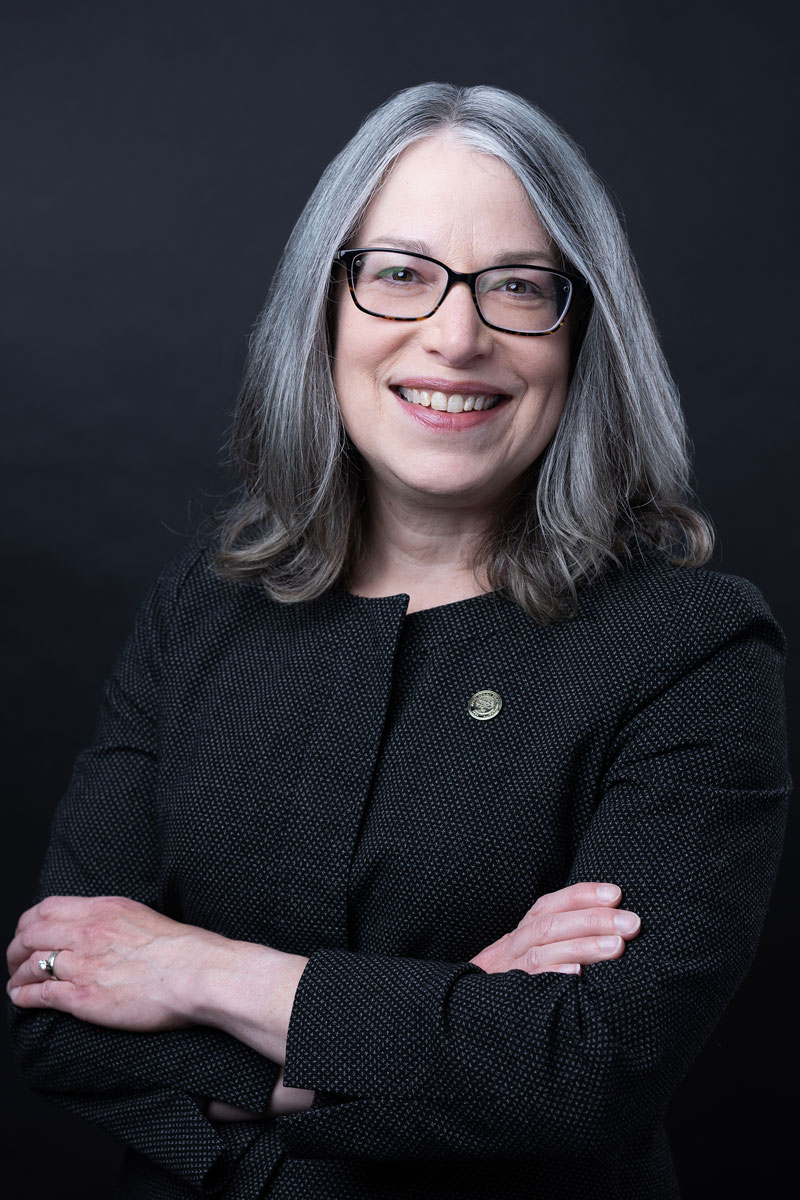
2026 State of the University Address
Chancellor Heather Norris
Good afternoon, everyone!
Whether you are joining us in this beautiful space or tuning in via the livestream, I want to thank you for bringing your time and energy to our gathering today.
I extend a special welcome to our newest faculty and staff members. For those I have not yet met, I’m Heather Norris, and it is my honor and joy to serve as App State’s chancellor. By choosing App State, you have become a part of a talented and purpose-driven community, united by a shared commitment to student success, academic excellence, and meaningful impact across our region and beyond.
And to our returning colleagues: Thank you for the passion and care you bring to our institutional mission every day. Together, we are setting our sights high for the future, and I look forward to building on our collective success.
Our progress is guided by collaboration across every part of our university. I want to offer my sincere appreciation to our campus leaders and to the full memberships of our representative organizations:
- The Faculty Senate, led by Chair Jim Westerman;
- The Staff Senate, led by Chair James Holden;
- The Student Government Association, led by Student Body President Elizabeth Ford; and
- The Graduate Student Government Association, led by President Taylor McGovern.
Thank you all for your dedicated partnership, your advocacy and the vital work you do every day on behalf of our entire campus community.
As we begin this new academic year, our work remains deeply rooted in our purpose: to broaden access to high-quality, cost-effective higher education and to support the success of every student who steps onto our campuses in Boone and Hickory, or engages with us online from across the state and beyond.
Building on our university’s momentum is a strong, mission-driven executive team. The Chancellor’s Cabinet is composed of exceptional leaders who oversee our core operations, work to advance our strategic priorities and remain steadfastly focused on empowering the success of our students, faculty and staff.
Today, you will hear updates directly from several Cabinet members:
- Executive Vice Chancellor and Provost Neva Specht;
- Executive Vice Chancellor and Chief Operating Officer J.J. Brown;
- Vice Chancellor for Research and Innovation Christine Ogilvie Hendren;
- Chief Financial Officer Brad Cooper;
- Director of Athletics Doug Gillin; and
- Vice Chancellor of University Advancement Will Sears.
Before my colleagues share their updates, I would like to highlight examples across four core areas that illustrate how our collaboration — across our campuses and with our regional partners — is elevating our public impact, fortifying our position of strength and shaping the trajectory of App State, North Carolina and the broader region.
- First, we are strengthening access and opening more pathways to degree completion, serving our state by expanding educational opportunities across the High Country, Catawba Valley and beyond.
- Second, we are deepening our community relationships, regional partnerships and local support systems.
- Third, we are expanding our economic impact and elevating public impact research across the region and state.
- And fourth, we are achieving record-breaking success in institutional philanthropy.
Our strategic enrollment management and planning continue to bear out. As we have anticipated for a number of years, the national demographic “cliff” has arrived, making our targeted investments in Hickory and expanded App State Online programs — including Flight Path — well timed.
The Appalachian Experience, both in person and online, provides enormous value — for our students’ growth and success during their time with us, as well as after they graduate and apply their knowledge and skills to their newfound jobs and careers. Every single one of our degree programs yields a positive return on investment for our resident students. We are opening doors to higher earnings, expanded career opportunities and an improved quality of life for families throughout our region.
Provost Specht will have more to share about enrollment management and student success initiatives during her presentation. Elevating student success will certainly remain a focal point for us in our upcoming Strategic Plan, as well as in our comprehensive fundraising campaign, and I thank each and every one of you for the vital role you play in supporting our students every step of the way.
Through our strategic partnership with Project Kitty Hawk, enrollment in our App State Online Flight Path degree programs has doubled year over year and now accounts for a quarter of our App State Online enrollment. These undergraduate programs in supply chain management, criminal justice, health care management, accounting, and organizational leadership and learning, and marketing are tailored directly for nontraditional learners and working adults.
With critical state investments and the expert guidance of our faculty and academic leadership, we are continually developing and refining the academic offerings at our Hickory campus. Together, we are positioning App State Hickory for long-term growth and expanding opportunities to serve the Catawba Valley region.
We are proud that approximately one-third of our students are the first in their families to graduate from college. To help ensure success in completing their degrees, we offer first-generation students specialized academic advising, comprehensive mentoring, tutoring, financial literacy education and career exploration and development services. Last year, because of our demonstrated commitment to improving experiences and outcomes for first-generation students, App State was among 60 higher education institutions to join the FirstGen Forward Network, a national initiative designed to support and enhance the success of first-generation college students.
Our dedicated support for transfer students remains central to our access mission. Through Aspire Appalachian, we hold formal articulation agreements with over 60% of North Carolina’s community colleges.
This summer, we partnered with the state’s Community College System to establish a first-of-its-kind pathway for the more than 20,000 North Carolinians pursuing health-related associate degrees. Developed by Beaver College of Health Sciences Dean Marie Huff and our health sciences faculty, this program translates Associate in Applied Science credits directly into an App State Bachelor of Science degree. Offered in Boone, Hickory and online, it offers an expedited two-year path to graduation — equipping future leaders in healthcare management and public health to serve communities across our region.
Every day, we are solidifying our regional relationships, community outreach and local support networks. The strength of these bonds was highlighted in our shared recovery efforts following Hurricane Helene, and earlier this year, the Boone Area Chamber of Commerce named App State its 2025 Large Business of the Year for the university’s leadership, economic contributions and dedication to the community.
We maintain regular communication with local officials and community leaders across the High Country and Catawba Valley. By connecting these conversations with collaborative research, service and outreach, our campus community directly serves, informs and uplifts our surrounding region.
As a rural-serving institution, App State’s efforts continue to drive economic growth and vitality across North Carolina and throughout our surrounding communities. Our designation as an R2 institution is a testament to the exceptional work of our faculty and staff, whose research and innovation, as well as mentorship and guidance of our doctoral students, have expanded the impact and reach of our institution. The Division of Research and Innovation, led by Dr. Christine Ogilvie Hendren, is helping to advance this work, which you’ll hear more about later in the program.
Across our region, our faculty and students are turning discoveries into practical solutions that strengthen North Carolina communities, businesses, rural healthcare and agriculture — from turning surplus sweetpotatoes into a plant-based milk product line, to developing AI-driven field microscopes that help livestock farmers detect parasites, to launching AI-enhanced digital coaching platforms for families of children with developmental delays. Whether we are improving health and longevity, advancing mountain flood modeling or designing emergency school microgrids, App State’s research enterprise remains deeply committed to serving the immediate and future needs of our state.
Beyond our research footprint, our campus enriches Western North Carolina in broad, meaningful ways.
Our vibrant arts and cultural programming serves as a major cultural and economic engine, drawing visitors from across the region whose off-campus spending fuels local businesses and enriches our creative community.
This commitment to our surrounding area extends directly into civic life. Over the past 12 academic years, our students have dedicated more than 338,000 volunteer hours through service-learning courses and programs — a contribution valued at over $12.2 million to our local community.
Additionally, App State Athletics delivers immense value beyond campus, generating an estimated $100 million-plus in annual economic activity for our region.
We recognize that our position as a primary economic driver across Western North Carolina relies on the strength of our people. Forbes highlighted that commitment by naming App State one of America’s Best Midsize Employers for 2026 — ranking us second overall in North Carolina and among the top 35 organizations nationally.
As I shared in my weekly update recently, we are achieving new records in institutional philanthropy. Fiscal years 2025 and 2026 now stand as the two most successful fundraising years in the history of Appalachian State. Building on this historic progress, we are preparing to launch App State’s first comprehensive fundraising campaign in over a decade. You’ll hear more on this from Will Sears later in today’s program, but I want to take a moment to express my sincere gratitude to Will and his team in Advancement, to Doug and our Athletics staff, to our deans and to everyone across our university community — in this room and on the livestream — involved in this work. Philanthropy is truly a collective effort. Whether you are directly securing gifts or making gifts of your own, designing transformative academic programs or supporting our students each day, your hard work and the inspiring stories you share align so directly with the passions of our supporters. Thank you all for your dedicated partnership in making this record success possible.
Our upcoming fundraising campaign will be directly guided by our new Strategic Plan and Master Plan — both of which are making significant progress thanks to your valuable input. The Strategic Plan is grounded in extensive engagement from this past spring and earlier this month, when faculty, staff, students, alumni, parents, leadership and regional partners across the High Country and Catawba Valley shared their feedback and perspectives. The plan is slated to be presented to our Board of Trustees for formal approval later this year, and the campus community will continue to be involved as the plan moves forward.
Our new Master Plan, which you’ll hear more about from Chief Operating Officer J.J. Brown, will serve as a living guide for the development of our physical infrastructure, ensuring our physical spaces directly support App State’s strategic goals. Now roughly 85% completed, the planning process has included ongoing engagement with university leaders, along with extensive interviews, on-site workshops and a communitywide survey that engaged nearly 2,900 respondents. It focuses on maximizing existing assets, supporting modern learning environments, enhancing campus connectivity and safety, creating vibrant gathering spaces and embedding efficiency into every decision. It is also slated to go before the Board of Trustees for a vote of approval later this year.
This vision for our physical campus is made possible through strong state partnership. We are deeply grateful to our North Carolina legislators for their vital budget investments this year in enrollment growth, employee pay raises, and over $56 million for capital projects across Boone and Hickory — ensuring App State has the financial support needed to sustain our momentum.
I also want to recognize and thank Matthew Dockham for his outstanding leadership in guiding our legislative advocacy efforts. Together with Matthew, members of our Board of Trustees, Foundation Board, Board of Visitors, Chancellor’s Cabinet, faculty, staff and students have stepped up to share the App State story across North Carolina. Thank you to everyone who partners with Matthew to lend their voice to advocate for our university and the University of North Carolina System, to support our shared future.
Our resilience as a university community comes from our shared dedication to supporting and respecting one another. We want every employee and student to feel safe, valued and supported in their work.
If you or someone you know needs assistance, please take advantage of the extensive resources available to you. I encourage you to familiarize yourself with the AppCares website, which consolidates our university wellness and health resources into one accessible location.
As I reflect on where Appalachian State University stands today, I am continually reminded that our momentum is never the product of any single individual — it is driven by the collective efforts of countless Mountaineers. Advancing this university is a shared endeavor that spans our faculty, staff, students, leadership, trustees, donors, state legislators and community partners. My role is to lead and serve alongside all of you as we shape our institution’s future, together, and I look forward to that work every day. Thank you for the opportunity to work with you!
I want to express my appreciation to Neva, J.J., Christine, Brad, Doug and Will for providing timely updates today.
You have a leadership team that is completely devoted to student success — and deeply committed to supporting you as you support our students.
We look forward to continuing these valuable conversations today and throughout the year ahead.
Executive Vice Chancellor and Provost Neva J. Specht
Good afternoon, everyone! Thank you for taking time out of your busy schedules to join us today across our Boone, Hickory and App State Online campuses.
On behalf of the Division of Academic Affairs, I want to express my sincere appreciation to our dedicated faculty and staff. You play an essential role in advancing App State’s academic mission, and your daily work directly shapes the lives and long-term success of our students.
Today, I’ll provide updates on several priorities across our academic enterprise, including:
- our enrollment management initiatives;
- our student success programs, including the campuswide implementation of Navigate360;
- our strategic focus on workforce readiness, career literacy and artificial intelligence;
- a new, streamlined framework for academic program review; and
- our progress on an accelerated 90-credit-hour degree pilot for transfer students.
I’ll also share a few highlights of the vibrant community impact made by our Arts Engagement and Cultural Resources unit.
Turning to our enrollment landscape, today — Aug. 28 — marks the UNC System Census Day. With census data currently being finalized, we expect to have a complete picture very soon and look forward to sharing full enrollment updates in the near future.
Preliminary indicators suggest we will see a dip in enrollment for our main Boone campus, while enrollment remains strong across our App State Online programs. App State Online and our Flight Path initiatives have consistently posted double-digit growth, expanding educational access for adult and nontraditional learners.
We must candidly acknowledge that higher education across the state and nation is confronting significant challenges. High school graduate numbers in North Carolina are projected to remain flat to slightly declining through 2034. Persistent inflation and cost-of-living pressures are leading families to scrutinize net costs more rigorously. Additionally, institutions across the state are expanding undergraduate enrollments, creating direct competition across traditional applicant pools.
To navigate these external headwinds, we are executing long-term marketing and enrollment strategies that build brand awareness, innovate program delivery and expand scholarship availability.
Our strongest opportunity to counter enrollment pressures and improve our yield rate is through scholarships. Students and their families require predictable, renewable, multiyear financial support to commit to an App State education, and we are working to increase funding to build a sustainable, recurring scholarship fund.
I want to express my sincere appreciation to Dr. Ashley Colquitt and her Enrollment Management team for their dedicated efforts to bring students to App State. And we must remember that student recruitment is a shared commitment that belongs to our entire university community. Whenever you see prospective students and families on our campuses, I encourage you to pause, welcome them and speak proudly about your programs and university areas. A single authentic interaction, a warm greeting or a moment of genuine connection can completely transform a student’s decision and inspire them to choose App State.
Retaining our current students is just as vital as recruiting new ones. Increasing our retention requires us to continue strengthening and scaling resources so every student feels supported and academically empowered. This fall, we are moving forward with the multiphase rollout of Navigate360, starting with Phase 1. Integrated with our Banner system, this platform coordinates student support by tracking referrals, alerts and appointments all in one central location — helping us connect students with the right resources at the right time.
Currently, we have approximately 150 faculty, staff and students supporting active users across the university, anchored by designated care unit leads for each participating Phase 1 area. We are also expanding participation beyond faculty, staff and advisors to include front-desk staff and student workers who play vital roles in daily student support. To manage this growing network ahead of Phase 2 in spring 2027 and Phase 3 in fall 2027, our Student Success and Information Technology teams are developing streamlined online forms and resources. Stay tuned as we continue building a more connected student experience.
I want to extend our sincere appreciation to the Student Affairs team for organizing a full schedule of Welcome to App events this fall to help our students build meaningful connections and become acclimated to our university community. A tremendous amount of coordination and thoughtful planning goes into executing these events, and we deeply appreciate all the hard work spent behind the scenes to create such an inviting environment for our students.
A highlight was the Fall 2026 Club Expo, organized by the Office of Campus Activities, during which new and returning Mountaineers explored opportunities across our more than 400 student clubs and organizations. These intentional efforts — anchored by strategic outreach through our Engage platform — ensure our students quickly find their place on campus, positioning them to feel valued, connected and prepared for both academic and personal success.
Earlier this month, Career Development Director Jennifer Shaffer gave a presentation at our Provost’s Retreat on future-proofing our graduates.
To better align our graduates with rapid shifts in industry demand, we encourage faculty to consider how our curricula can adapt to modern workforce expectations. Employers increasingly seek adaptability, critical thinking and applied digital fluency, with demand for entry-level AI skills nearly tripling since late 2025.
Recent research from the Strada Institute for the Future of Work shows that employers now value high-quality, project-based learning just as much as traditional internships. By integrating more project-based learning directly into our courses, we can increase access to experiential learning and ensure all students build the job-ready skills modern employers demand.
We encourage departments and programs to integrate National Association of Colleges and Employers professional competencies and high-quality project-based learning into coursework and capstones. By working to close the gap between student self-assessment and employer expectations, we enhance graduate employability, strengthen our institutional value and prepare our graduates for long-term career resilience.
To support our academic programs and maintain institutional agility, Academic Affairs is introducing a streamlined approach to academic program review this fall.
We are temporarily pausing the Periodic Comprehensive Review process, which will resume next academic year on a five-year cadence. This year, we will conduct a simplified review to support our ongoing academic planning. Rather than a complex administrative hurdle, this process will ask just five clear quantitative and qualitative questions — which are currently being developed with direct input and guidance from our Academic Affairs leaders and faculty. This initiative is not about program reduction; rather, it provides an intentional opportunity to level-set, identify resource needs and help departments articulate their vision for program growth, improvement and innovation.
In the spirit of academic innovation, we are partnering with the University of North Carolina System to pilot an accelerated 90-credit-hour degree pathway. Designed specifically for transfer students who have completed an associate degree at a North Carolina community college, this pathway provides a faster, lower-cost route to graduation without sacrificing academic quality or learning outcomes. To support these transfer adult learners, our current proposal explores flexible, asynchronous online delivery for these reduced-credit programs. We are currently engaging in thoughtful discussions with deans and faculty regarding candidate programs for the pilot launch of this initiative, with a goal of launching in fall 2027.
Finally, I want to share a few highlights of the vital contributions of our Arts Engagement and Cultural Resources unit. Each year, this division enriches our campus and High Country communities by engaging thousands of local residents as well as visitors from across the region. And its arts and education outreach programs connect university resources directly to a diverse audience of arts patrons, teachers and learners.
This season’s An Appalachian Summer Festival was another remarkable success, bringing world-class talent directly to our stages in venues across the Boone campus. Ticketed attendance reached 11,736 patrons — a 36.5% increase over 2025 — in addition to hundreds of community members who attended the festival’s free public events.
Six new sculptures were recently installed along the Boone campus Arts Corridor, which extends from the Turchin Center for the Visual Arts on King Street into the heart of campus. The sculptures will remain on display for a two-year period through August 2028. Beyond enriching our physical environment, this corridor serves as an outdoor classroom that deepens cultural engagement and reinforces our connection with the broader Boone community.
Just last week, we announced the new lineup for the Appalachian Arts Series, which presents world-class performances across music, dance and theater. By bringing nationally and internationally renowned artists to our stages, the series offers transformative experiences that connect classroom learning to the broader world.
We also announced the new season for our APPlause! K–12 Performing Arts Series, which connects university arts resources to students, teachers and homeschool families across our region. These performances inspire a love of learning and ensure broad access to the arts, reaching anywhere between 8,000 and 9,000 students annually.
As we embark on this new academic year, our focus remains clear: prioritizing student success, aligning our curriculum with evolving workforce needs, managing enrollment through strategic investments and fostering rich cultural engagement across our region.
Everything we accomplish is made possible by your expertise, hard work and shared commitment to our Mountaineer community. Thank you for everything you do for Appalachian State University, and I wish you all a productive and inspiring academic year.
Executive Vice Chancellor and Chief Operating Officer J.J. Brown
Good afternoon! I know many of you, but for those whom I don’t know, I’m J.J. Brown. As the chancellor referenced earlier, I serve as the chief operating officer and one of the executive vice chancellors.
I am grateful to be with you this afternoon as we start this year together. I am going to share some updates about the Division of University Operations.
First, our developing mission statement. Essentially, our team serves as the backbone of the university. We help all of you do the student-centered work that makes App State thrive.
As you can see, our team is vast and wide. We represent the public safety functions; emergency management; campus dining and catering; campus store; parking and transportation, University Communications; Planning, Design and Construction; and the amazing facilities team that completes approximately 1,300 work orders each month and ensures we have heat and water; as well as our team at New River Light and Power, who literally power our community and campus.
I have a core leadership team that you see before you.
Mark Lacey joined us this summer, and I want to extend my sincere thanks to him for being a part of our team in leading a key department — Human Resources.
We will also be launching a search this fall for a chief marketing and communications officer. That process has begun, and I appreciate all of the work of Donna Gallo this last year as she has served as interim director.
I would like to share a few updates related to campus projects.
This has been a busy summer of transition, but also some disruption. Thank you for your patience; we have a few items to celebrate today.
First, I would like to say thank you to the many, many individuals who helped finalize Edwin Duncan and its journey over the last few years, including Hurricane Helene’s impact on the renovation timeline.
We are grateful for the legislature’s support for this renovation. The building has updated classrooms and labs and is now home to the Department of Mathematical Sciences and the College of Arts and Sciences Dean’s Office.
Peacock Hall has continued to develop before our eyes this summer. The addition of the glass panels really brings the building into focus. We appreciate the continued investment by the state legislature for their generous support of this project.
With recent additional support from the legislature, we continue to develop the STEM Building at the Innovation District. This funding will allow us to complete the second floor and add the much-needed greenhouses to support our Biology Department.
We are grateful for the state’s continued support of the Hickory campus. The second floor renovation is complete.
The additional classroom space and labs, including the nursing simulation lab, opened this semester. Hickory remains an important part of our mission to provide access to education, and we appreciate that we are able to offer this new space.
At our App 105 property, we’ve seen some incredible progress. Some of you will remember that this is the site of the former Watauga High School property, which the university acquired in September 2017.
As we continue developing the property, we’re excited to have a new student housing option on the horizon. This will mean an increase of approximately 850 beds in apartment-style units.
The university’s real estate development corporation is working with a developer to build and lease much-needed housing for sophomores, juniors and seniors and also graduate students. We will start offering these apartments to students later this fall, as they will be ready for move-in next year.
The Sofield Family Indoor Practice Facility is nearly completed, with the recent installation of the turf.
Starting this fall, the building will be used by our student-athletes and campus community. The clinic spaces for Breakthrough Therapy and UNC Health Appalachian will be finalized in the coming months.
Work has continued on the university Master Plan this summer grounded in this vision. It will connect with our Strategic Plan and will be an important roadmap for our future growth. It will also provide ways we can stay grounded in our character and place — the things that make App State so special.
The listening sessions, campus survey and meetings with key constituency groups provided information to create the goals.
These goals are driving the draft design documents the group has worked on this summer.
In a few weeks, we invite you to one of the discussion groups on the Master Plan on Sept. 22.
There have been a number of changes in housing regulations in New York City that have impacted our ability to utilize the NY Loft as we have for many years.
The regulations requiring our space to be used only for stays longer than 30 days have forced us to change our approach. This has been a key asset for the university for many years, and to accommodate this shift, we are working to pivot the space to serve students who need housing for internships in New York City.
The city remains one of the nation’s premier professional markets, and we want to continue to help our students have these kinds of experiences. The Loft will be shifting to University Operations, specifically to University Housing.
They will work with Career Development and many of you to help promote this opportunity for student internship experiences starting in summer 2027.
Human Resources is an important department, providing key resources and services to our entire community.
Last year, I heard many stories about contacting the team and not receiving a call back, or even being able to reach someone to talk about a question or issue.
This ticketing system, which they will launch in October, will provide a centralized platform for submitting, tracking and managing HR requests.
This new system is designed to create a more efficient, transparent and responsive HR experience. We hope this will help the team continue to serve you and our campus.
Grandview Catering joined our Operations team back in January.
This team is full of incredibly talented people, and our Dining staff has worked through this transition over the past several months. They are excited to offer several tiers of service to help you host events that fit your needs and budget.
These tiers were designed to expand access to Grandview Catering services and facilities, including Grandview Ballroom, for departments, student organizations and signature university events.
This team looks forward to partnering and collaborating with you in this new model. Later this fall, they will host a showcase right here in this room, where attendees can learn more about the available service options and sample some items.
In addition, Campus Dining continues to offer a variety of meal plan options to serve our campus community. We know that this value is also appreciated by our faculty and staff who have asked for options.
This fall, we will launch a new Flex 25 meal plan for faculty and staff. If you use your Charge Express account (AppCard) to load funds for purchases, you already save 10%, this Flex 25 will expand those savings even further. We are excited to offer this later this fall.
Campus Dining is also expanding its services with the addition of a new market in the bottom of Thunder Hill Hall (across from Trivette Hall) as part of a master plan expansion later this fall. We are also expanding dining capacity on the bottom floor of Trivette Hall this fall for our students.
You will also start to see work being done on the second floor of the Student Union for a new commissary kitchen to help provide additional dining options in the Student Union (old McAlister’s space for you folks who have been here for a while) that will also connect the second floor of the Student Union to the top floor of the Campus Store.
The Campus Store is currently hosting an exclusive Faculty and Staff Sale through Sept. 2, offering 20% off your entire purchase. Every purchase supports our Campus Store’s ability to give back to student scholarships. So if you need some App State gear, we appreciate your business.
In closing, I want to make a pitch to you asking for your help on Fridays. We have been a source of vision, hope and education for 127 years in this community, region and throughout our state.
The black and gold unite us near and far with our past and our present. I hope you will wear (and encourage others) to wear black and gold on Fridays. It is a small way for us to honor the past but also demonstrate community in the present. Campus Dining will also provide you with a free fountain drink each Friday at Sanford Commons in Central Dining — just wear your black and gold! We are better together, and this is just one small way we can live that out.
Thank you.
Vice Chancellor of Research and Innovation Christine Ogilvie Hendren
Good afternoon, I’m pleased to be here with you all today.
Since one year ago, when our university was designated an R2 research institution and the chancellor elevated research and innovation to report directly to her, a lot has changed.
Many of you have been part of contributing to this change and helping us evolve to serve campus better — thank you for this engagement.
Today I would like to share with you who we are, how our division is working to strategically advance the way research and innovation can drive us toward success in achieving our university’s mission, and invite participation in defining what R2 means at Appalachian State.
One set of units focuses on administering your research and innovation projects through the lifecycle from proposal submission, establishing contracts and agreements and spending the funds to make the work happen, all while following the regulatory landscape and ensuring the university and faculty are safe and compliant.
The other set of units has grown quite a bit over the past two years. Grants resources and services leads research development by building capacity and helping faculty develop skills and opportunities, and now includes the Office of Student Research. Translation and Commercialization has become a broader focus as we build our innovation infrastructure to support faculty in taking their ideas to market.
This final group of units represents a mixture of strategic research and impact engines that navigate and collaborate with the rest of the division I just described as well as campus and community partners to coordinate and mobilize toward targeted missions that align with our strengths as a university.
First we have the Research Institute for Environment, Energy and Economics, or RIEEE, with a center for each of the E’s, including our longest running Appalachian Energy Center.
In the past year, RIEEE took custody of Team Sunergy as well. This incredible group of students in their excellent, immersive research and innovation environment embodies the connection between research and our core educational mission, and though it belongs to all of campus, RIEEE has taken on the care and feeding of this wonderful team.
The Center for Economic Research and Policy Analysis lives in the Walker College of Business and demonstrates one of our many cross-institutional, deep collaborations by also being part of RIEEE. We also have the Southern Appalachian Environmental Research and Education Center as well.
We are thrilled to have the Office of Rural Promise as a core part of the division as well.
Through College Access Partnerships, Learning in the Professions and the NC Rural Education Collaborative, this impressive office has an incredible regional impact and is always building and growing, working now in 35 counties, reaching more than 40,000 students across 150 schools through their eight funded programs, now topping the $100 million mark in funding.
We also look forward to growing more multidisciplinary, generative research and innovation alongside teaching out at the Blackburn Vannoy Estate and Farm.
The Small Business Technology and Development Center helps regional businesses, across both our campus regions, to access resources to help them scale and reach financial sustainability.
And App Well, our other research institute on campus that’s housed in the Beaver College of Health Sciences and also a strong divisional partner, continues to grow its broad impact on rural health transformation, growing well and aging well.
Together we continue to drive our growing research enterprise.
Speaking of growth — as you’re all aware, App State received an R2 Carnegie classification last year, which is a descriptive designation based on two metrics that you can see here graphed over the past 10-year period.
In black you see the number of research doctoral degrees conferred, which going forward must be above 20 per year averaged over the three-year period of consideration.
In gold you see the research expenditures, which are both internal and external dollars spent in categories that count toward the National Science Foundation Higher Education Research and Development survey we report each year.
Research expenditures have been steadily rising and are now well above the $5 million threshold.
The academic programming portion of this picture falls within the provost’s purview in Academic Affairs, which you heard a little bit about just earlier from her. We collaborate closely on those discussions of supporting strategic doctoral research.
Here you can see the dollar amounts of the external awards we submitted proposals for — in black — and also how much we have been awarded in those same time periods — in gold.
Over the past 10 years we have increased our winnings to a record of $40 million in fiscal year 2025. Some of our anomalously large grant submissions to the Department of Education within the Office of Rural Promise and College of Education account for the spike you see in 2021 awards as well as the 2024 submissions.
It is also helpful to understand the submission and award activity by number in addition to dollar amount. The actual number of submissions and awarded proposals has stayed relatively flat and, in fact, has decreased.
Together with the increasing awards and expenditures, this reflects the fact that our faculty are targeting larger, more complex opportunities and winning them more frequently.
The question arises — as part of a larger consideration fitting into the strategic and master planning processes that the chancellor is leading right now — what does this research and creativity growth means for App State? What does a healthy and successful R2 look like in an institution that still remains regionally committed, with workforce development, educational excellence and public impact at our core?
Best practice models for regional R2s guide us to build strategic partnerships around the strongest parts of our core mission, and focus our strategic supports and investments around research growth to advance our impacts where we are strongest.
App State’s core underlying mission shapes the way that we are recognizing and building on our foundations of research and creative excellence.
We serve as the “headwaters” of the state in many ways, providing critical workforce development and standing out as the superlative producers of high quality graduates across a number of fields that you all know well. You see just a few of them here. Focusing on strategic support of growing where we’re already strong, together with building our capacity to run toward timely opportunities, point us to where we should be ready to jump in with research and innovation.
It has been the hard work and success of faculty, staff and students in research and creative activities that got App State to its R2 designation.
Moving ahead, a cross-divisional working group will be holding a series of campus conversations that explores what R2 means for us. Each topic will have a wide-open Zoom call as a start, followed by a 90-minute, space-limited workshop you can register for to dig in further.
Based on a workshop we facilitated last spring with 60 faculty, staff and administrators, we have heard these six topics of interest to our campus community that we will spend this coming academic year hosting discussions and workshops to generate a shared vision and some proposed action steps.
You can sign up to receive Zoom invitations and register for the fall workshops. You will also receive an email next week with the registration link and additional information.
The commitment to public impact of our applied research and a core educational mission means that our R2 status and our successes to date stand on several broad foundations enabling our research growth.
Three of these that position App State as a unique standout are:
A longstanding strength in student engaged research experiences — particularly with an undergraduate and master’s student focus, which sets us apart from many high research institutions where doctoral students and postdoctoral researchers carry most of the research responsibility and therefore the learning benefits. That we know how to meaningfully engage undergraduate students in research sets us up to make unique contributions to research and innovation and to our graduates and region.
To lean into this strength, and create community, we are building up Mountaineer Student Scholars as a coalescing name for all students engaged in research and creative activity experiences across labs, studios and classrooms.
Under the Mountaineer Student Scholar name, we link together resources and expertise across all of campus through several gatherings a year, so that all the parts of our university that support and advance student engaged research, scholarship and innovations can be more connected, and our Mountaineer Student Scholars can continue to grow in their pride, visibility and access to great experiences.
Two other key foundations we can bring to lift all of our impacts across areas of excellence include:
A strength in entrepreneurship and innovation — skill sets and mindsets made systematically available to students and faculty alike to translate research into real world commercializable or otherwise tangible outcomes.
And a cultural, historical and academic expertise in how to effectively collaborate between disciplines and types of institutions to make change and progress in the real world.
These foundations allow us to build toward impacts in areas of excellence where our applied research and our academic strengths converge.
Focusing on areas where our excellence meets regional economic and workforce development priorities, we can scale to intentionally make direct public impact through our research and innovation, and through churning out problem solvers to tackle these and other real issues when they leave App State.
I’ll share here some examples of areas of excellence that stand on these foundations to make tangible impacts. Areas where we are already doing public impact research, and are now systematically naming and intentionally scaffolding these efforts so we can scale them, include:
- The outdoor economy — everything from tourism and recreation business models to hellbender preservation and astrotourism for our dark skies.
- Resilient construction science — building on our strong sustainable technology and the built environment program and advanced materials research.
- Ag Tech innovations — including AI-enabled livestock parasite detection and beekeeping technology, and sweetpotato milk that transforms otherwise wasted sweetpotatoes into sustainable milk products.
- A broad range of health solutions, including focus on aging well and growing well and rural health transformation.
- Educational access with emphasis on rural opportunity expansion across the lifespan, with a particular focus on early childhood education that provides workforce-enabling childcare options.
Our research and innovation growth centers around identifying opportunities to build on our strong foundations of student engagement, collaboration and innovation. Continuing our advancement into strong R2 territory means leaning into our academic and research strengths with the purpose of serving the region we call home by producing ideas, professionals and businesses that elevate the quality of life and well being in Western North Carolina and beyond.
I’ll close with an invitation to our eighth annual Research and Creativity at Appalachian — or ReCAPP — which celebrates and showcases research, scholarship and creative endeavors of App State faculty and staff. We are supported in this annual event by University Libraries and by the Hayes School of Music. It will be held at the Broyhill Music Center with lightning-style presentations and performances and a poster presentation paired with refreshments, and will culminate in keynote addresses from the 2026 Chancellor’s and Provost’s Awardees for Excellence in Research, Scholarship and Creative Activity. We hope to see you there.
Chief Financial Officer Brad Cooper
Good afternoon! Thank you for the chance to share an update from University Finance.
As I shared last spring, University Finance’s focus is on partnership and stewardship — and I mean that quite literally. Almost everything I’m going to walk through today centers on how Finance partners with campus to advance our mission in a financially sustainable manner. So here’s what I want to cover: a quick look at where the team stands today, some important updates coming out of the legislative session and then a preview of two big processes headed our way over the coming months — plus one new initiative I’m particularly excited about.
Before I get into the details, I want to ground this in why we do what we do. As App State works through its new Strategic Plan, we’re taking the opportunity to refresh our own mission and vision in Finance so that it aligns with the university’s strategic priorities. At the core, it comes down to three things: financial stewardship, operational excellence and exceptional customer service.
I want to take a minute to make sure everyone knows how our Finance team is organized because it’s not uncommon for colleagues to mention “I didn’t know who to call about that.” So — University Finance breaks down into three main areas:
Jennifer Geouque leads our Budget Office, which maintains budgetary oversight of our general fund and trust funds. Additionally, her team helps us stay focused on the future through our financial planning operation, which includes two major processes I’ll speak to later, tuition and fee setting and the all-funds budget.
David Jamison leads the Controller’s Office — that’s accounting, accounts payable, cash management, financial reporting, payroll, student accounts and tax compliance. Basically, this is the engine room that keeps the day-to-day financial operations running at the university.
And last but certainly not least, Walt Parsons leads Procurement Services — P-Card, contracts, state surplus property and warehouse operations.
In addition to sharing our structure and hopefully helping you determine who best to contact as needs arise, I also want to take this opportunity to shine a spotlight on the great work that all these teams do. I am incredibly grateful to work with such talented and dedicated colleagues and am so excited to support your important work to advance App State forward.
As fall returns to the High Country, so does the magic — crisp mornings, leaves transforming into a beautiful array of colors, students rushing to and from their classes, athletic competitions and traffic.
But there are other exciting things happening in University Finance: Our colleagues in the Controller’s Office are deep into the normal fall rhythm — student billing and receipts, preparing annual financial statements and supporting our annual audits.
At the same time, we’re actively implementing Senate Bill 257, which I’ll spend the next few slides on. Our Budget Office is loading new budgets into the system, and our HR and Payroll teams have worked hard to implement legislative salary increases — or LSIs — along with one-time bonuses. It’s a lot of moving pieces happening simultaneously, and I want to recognize these teams for managing all of it well.
Let’s talk about what Senate Bill 257 actually means for App State in dollars and cents.
First, enrollment growth funding. Because our enrollment has grown, the state provided $4.4 million of nonrecurring funding tied to our 2024 enrollment change, and just over $1 million in recurring funding tied to our 2025 enrollment change. Because the $4.4 million allocation is, to date, nonrecurring, leadership is evaluating how best to deploy those resources without overextending the university. We anticipate further consideration of this funding when the legislature returns for the long session.
Second, employee compensation. SB257 funded a 3% across-the-board raise for eligible employees, retroactive to July 1 of this year. Additionally, it included one-time bonuses of $1,750 for employees earning less than $65,000 and $1,000 for those above that threshold.
SB 257 also provided meaningful capital investment to App State.
This includes $2 million to demolish Eash Hall, which will serve as the site of an additional STEM building in future budget cycles, and continued support of $14.35 million for our Hickory campus and $9.9 million for Walker Hall.
We also received additional funding of $25 million for the Innovation District and $5 million for Peacock Hall.
This generous capital support will help us continue to build and maintain exceptional spaces that foster productive learning and working environments for our faculty, staff and students.
A few more pieces of SB 257 worth highlighting.
We received additional building reserves, both recurring and nonrecurring, to support the operations and maintenance of the STEM Academic Building and Greenhouses, as well as the Peacock Hall addition.
App State was also the beneficiary of directed grants — $120,000 each to App Well and to the Reich College of Education — to support specific initiatives in those areas.
Finally, SB 257 is projected to increase the amount of sports wagering receipts by $1.8 million in support of Athletics in fiscal year 2027. In fiscal year 2028, if sports wagering tax revenue targets are hit, App State Athletics will be eligible for additional support from sports wagering receipts.
I also want to spend some time to address our performance funding. As a finance guy, the dollars associated with this matter, but the more important aspect of our performance funding ties back to the primary reason we are here, our students and their success.
First, who can tell me what our performance metrics are?
We have five performance metrics designated by the UNC System, and one institutional metric, which in our case is Adult Learner Enrollment.
Thanks to the amazing work of colleagues in Academic Affairs, Student Affairs and, quite frankly, all of our faculty and staff across this university, App State’s overall performance metrics improved over the prior year increasing our total performance funding to $2.3 million, an increase of about $468,000 over the prior year.
Looking ahead, there are two major processes I want campus to be aware of.
The first is the annual tuition and fee setting process. The UNC Board of Governors will meet in September to discuss tuition and fee rate setting for the upcoming cycle. Shortly thereafter, the UNC System Office will distribute that guidance to campuses. In October, new rate proposals will be considered by the Tuition and Fee Committee. In early December, App State’s requested tuition and fee rates will be voted on by our Board of Trustees and sent to the UNC System Office for review. In February, the UNC Board of Governors will vote on the requested tuition and fee adjustments.
Simultaneously, App State will begin preparing for the fiscal year 2028 All-Funds budget. Presently, the Cabinet is evaluating a more strategic budget request process and developing priority-aligned request templates. By mid-November, the System Office should issue All-Funds Budget guidance to the campuses. By December, trust fund and auxiliary budgets are due to the Budget Office. The Budget Office then reviews and compiles unit budgets across all funding sources that are then reviewed by Cabinet. In March, the All-Funds Budget will be presented to and voted on by the Board of Trustees with the final budget package due to the UNC System Office by May 1.
I’d like to close with something new we're building — the Financial Liaison Program: a formal partnership pairing University Finance with dedicated financial liaisons who serve as the financial point of contact for their unit.
In practice, that liaison plays both sides of this partnership. They’re the primary financial contact for their unit — sharing policy updates and new tools and answering the day-to-day questions that come up. But just as important, they carry information back the other way: surfacing immediate needs and concerns and giving us ideas for how we can make our own processes work better.
I opened today talking about partnership, and this program is that idea put into practice. Too often, we see a budget line without the story behind it. A liaison in every unit gives us a clearer, more timely understanding of the real challenges you’re facing — and just as important, it gives campus a direct channel to bring us ideas and solutions on how we can do this better, together.
We’re still finalizing the framework and rollout timeline, so more details are coming this spring.
To my University Finance colleagues — thank you for your tremendous effort in support of this University. To our faculty, staff and students — thank you for the impact you have on this community, this region, our state and beyond. We are honored to serve you all!
Director of Athletics Doug Gillin
Good afternoon. I’m Doug Gillin, serving as director of App State Athletics.
As the world changes around us, and the industry in college athletics evolves, our mission remains the same — to support the educational mission of this great university, protect and promote the health and safety of our student athletes, guide and support our student-athletes in their quest for excellence academically, athletically and socially, and gather and engage our university community to become a part of our plans.
Our student-athletes continue to excel in the classroom — spring 2026 marked the 28th consecutive semester of a cumulative student-athlete grade-point average above 3.0. Further, all sports also maintained a team cumulative and semester grade-point average of above a 3.0.
In the community, App State student-athletes compiled 2,062 hours of community service during the 2025–26 academic year. In recent months, several teams participated in the Boone July 4th parade, as well as greeting Watauga County School students in the drop-off lines during the first week of classes for the fall semester.
We are also excited about leading off this year’s Family Weekend events with our Thursday night game against James Madison on national television at The Rock on October 22nd. The passion and interest in App State Football from our fan base continues to be strong, as we sold out of season tickets for the fifth straight season.
From a fan interest perspective, the Mountaineers Athletic Fund hit fundraising records for both fiscal year 2025 and fiscal year 2026. Baseball also set a ticket revenue record for the fourth consecutive season in 2026. Finally, in partnership with Alumni Affairs, the 2026 Spring Tour was a tremendous success, as we saw strong crowds throughout the region at each tour stop.
Regarding Athletics capital projects, the Sofield Family Indoor Practice Facility is progressing, with the practice surface set to be completed in late August with the remainder of the facility to be completed over the winter. The baseball hitting facility extension also continues to progress, with a completion date early in the fall semester.
Recently, the Appalachian 105 Sports Complex saw both the Mildred F. Southern Indoor Tennis Facility and softball locker room reaching completion.
From a fundraising standpoint, the Legends Gala, one of the department’s most significant annual fundraisers, is set to be held on Friday, Sept. 4. Also, several successful fundraising golf tournaments were held over the summer of 2026.
As the industry continues to evolve, we continue to monitor various NCAA legislative changes, including a new age-based eligibility model that establishes a single five-year eligibility period tied to age and college enrollment. We are also monitoring updates related to the Protect College Sports Act, which is expected to be brought up for a vote in the U.S. Senate in September. As the college athletics industry has evolved, costs have increased and every department is having to adapt their business model to remain competitive.
To conclude, regardless of the change around us, our mission, as mentioned at the beginning, does not change. We strive to bring tremendous value to our great university and create uplifting experiences through sport.
Vice Chancellor of University Advancement Will Sears
Good afternoon! I’m Will Sears, vice chancellor of university advancement and a proud alumnus of the Class of 1994.
In philanthropy, gratitude is critical, so I’d like to start with a thank-you. We would not be successful without everyone in this room. Thank you for what you do to support this university.
Today, I’d like to take you from macro to micro in terms of our successes in advancement.
We often get questions about the App State Foundation. What is it? What does the foundation do? Where does the money go?
Ultimately, we help people give to the areas they love, from academics, to art, to athletics.
As you heard from Chancellor Norris, we have had historic fundraising successes over the last two fiscal years.
These accomplishments would not have been possible without everyone in this room — thank you!
I’d like to highlight a few exciting numbers from this past year.
- Our endowment is now $271.4 million. For context, it was $150 million in 2023. That’s a huge leap in a few short years.
- We raised more than $51 million in fiscal year 2026, marking the second consecutive year above $50 million in fundraising. Together, fiscal year 2025 and fiscal year 2026 are the two best fiscal years in university history.
- How do we get to these impressive numbers? Lots of gifts! Our two-person gift processing team handled more than 31,000 gifts last year. Hats off to them for a job well done!
We also had an incredibly successful few years in many areas of the university, particularly the Walker College of Business, the Reich College of Education, App State Athletics and the Beaver College of Health Sciences.
Not every gift is available right away. Many gifts are part of estate plans or another type of planned gift.
These gifts give us a really unique and rewarding opportunity to help people think about the legacy they want to leave at Appalachian State.
Alongside two record years of cash giving, the university has also achieved two consecutive years of record planned giving. In fact, we secured more than $17 million in estate commitments each year.
I have to share a quick story about Susan Di Brango, who made the largest estate commitment to the university last year. She made her gift to the Beaver College of Health Sciences.
Her husband went to Appalachian. After he passed away, she wanted to honor him with a legacy gift to the university he loved. Once realized, it will be $2.8 million divided into two scholarship endowments for students who are majoring in PE and nursing.
Our job in University Advancement is to tell the Appalachian State story. And that story is not about commas and zeros. It’s about relationships and people.
We meet with alumni, parents, friends and donors and take them on what I would call a philanthropic journey — helping them understand the impact they can have and connecting their passions with the people, programs and priorities that make this university special.
But here is the most important part: We don’t create that journey and those stories. You do.
This is Jim Burr. Several decades ago, he was a student at Appalachian. He had an amazing experience and incredible mentors, especially in the College of Business.
One mentor came up to him one day and said, the big eight accounting firms are coming in two weeks and I need you to be ready for an interview. So, he got himself ready and that was the beginning of his success.
Fast-forward many years and he now works for the global investment firm The Carlyle Group, which was co-founded by billionaire philanthropist Bill Conway.
Bill also happens to be the founder of the Bedford Falls Foundation, which has committed millions of dollars to address the critical shortage of qualified nurses nationwide.
Jim offered to put us in touch with Bill Conway. Ultimately, the Bedford Falls Foundation committed $1 million to Appalachian’s nursing program.
Last fall, we welcomed the inaugural class of Conway Scholars — a remarkable class of 42 students.
This group of students would not be standing there if not for the great experience Jim had as a student.
Every day, faculty and staff are teaching, mentoring, advising, coaching, supporting and creating experiences that change the lives of our students. Those are the stories we take to our donors.
So when you hear that Advancement has had record fundraising years, I want you to understand that those aren’t just Advancement’s successes. They are your successes.
We may be the ones having the conversations and asking for the gifts, but you are the reason people want to give.
Another incredible story is the university’s solar vehicle team. Wow!
You have likely heard that our team made history at the 2026 Electrek American Solar Challenge — becoming the only team to win first-place twice in the competition’s multi-occupant vehicle category.
I think that deserves applause!
Several years ago, the team told us that if we could get them the funds, they would win. So, we got to work finding the financial resources they needed to get the gold, but we didn’t do it alone.
The solar vehicle team members were incredible, especially during our annual day of giving. The students were calling their own contacts and asking them to give, and they did!
The solar vehicle team represents the university pride that is always on full display during Appalachian State Giving Day.
In 2026, more than 3,600 donors gave more than $2.8 million in support of programs and initiatives across our campuses.
This event is an amazing celebration of everything we love about Appalachian — and the many reasons you have given all Mountaineers to give back to the university.
It’s heartwarming to read the hundreds of stories that are shared each year about why people want to give to Appalachian — and nearly every story begins with a personal connection during their time on campus, either as a student or a university patron or friend.
I hope you’ll save the date for our next giving day on April 8, 2027.
Speaking of pride, we are working diligently on the university’s first comprehensive fundraising campaign in over a decade. This will be the ultimate showing of our black and gold spirit.
We have advanced planning well underway. For instance, we completed 46 interviews, sent 33,000 surveys and reviewed a decade worth of data. Whew!
What we heard, time and again, is that people love Appalachian and they are excited to engage with us in support of this campaign.
Our success will depend on every Mountaineer, near and far.
When we talk to alumni and donors, we hear a common theme over and over again.
They don’t usually start by telling us about a building. They don’t start by talking about a balance sheet or a campaign goal. They don’t talk about commas and zeros!
They tell us about a professor who believed in them. A coach who pushed them. A mentor who changed their direction. A classmate who became a lifelong friend. An advisor who helped them see a future they couldn’t see for themselves.
If the student experience isn’t transformational, the philanthropy won’t be transformational either.
The stronger that experience is, the stronger their connection becomes. And the stronger that connection becomes, the more likely they are to want to give back and help create that same experience for the next generation.
We are thankful to have amazing partners like you to make it all happen. Together, we win. Together, we move mountains.